

When MicroStrategy sold just 32 Bitcoin in late May, the crypto world briefly held its breath. For a company that built its entire identity around accumulating Bitcoin, any sale — no matter how small — was bound to raise eyebrows. But the MicroStrategy Bitcoin sale of roughly $2.5 million worth of BTC was less a …
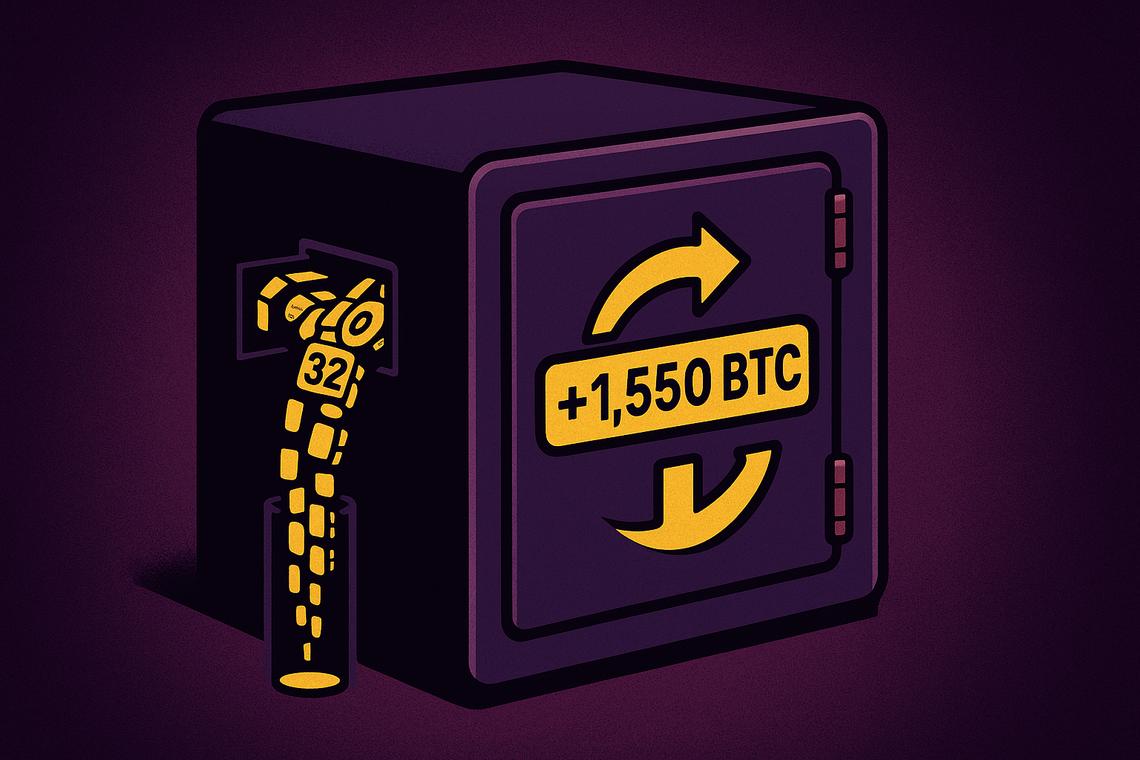
When MicroStrategy sold just 32 Bitcoin in late May, the crypto world briefly held its breath. For a company that built its entire identity around accumulating Bitcoin, any sale — no matter how small — was bound to raise eyebrows. But the MicroStrategy Bitcoin sale of roughly $2.5 million worth of BTC was less a retreat and more a glimpse into how corporate Bitcoin finance is quietly growing up.
Key takeaways
- MicroStrategy sold 32 BTC for approximately $2.5 million between May 26 and May 31 to fund preferred stock dividend payments.
- The sale represented just 0.0038% of the company’s total Bitcoin holdings — a fraction so small it barely registers on the balance sheet.
- Blockstream CEO Adam Back called the move a sign of balance sheet flexibility, not a bearish shift in strategy.
- The company followed the sale by purchasing 1,550 BTC for $101.3 million, nearly 50 times the size of the original sale.
- Michael Saylor claims MicroStrategy’s Bitcoin and cash reserves exceed outstanding debt by roughly $48 billion.
A $2.5 Million Sale That Punched Above Its Weight
On June 1, MicroStrategy disclosed it had sold 32 Bitcoin between May 26 and May 31 at an average price of $77,135 per coin, raising about $2.5 million. The proceeds went directly toward funding distributions on the company’s preferred stock. In dollar terms, it was a rounding error for a firm sitting on hundreds of thousands of Bitcoin. In symbolic terms, it set off an immediate debate.
The sale represented approximately 0.0038% of Strategy’s total Bitcoin holdings at the time — a fraction so tiny it barely registers. Yet because Michael Saylor had spent years championing a “never sell” philosophy around Bitcoin, even this microscopic transaction drew scrutiny.
Saylor’s response drew a line between personal advice and corporate action. “I said to YOU never sell your bitcoin,” he told the audience at BTC Prague, drawing a clear distinction between what he tells individual investors and what a publicly traded company must sometimes do to keep its obligations in order.
Adam Back’s Take: Treasury Flexibility, Not Retreat
Blockstream CEO Adam Back offered perhaps the clearest reframing of what actually happened. Speaking in a Bloomberg interview shared on YouTube, Back argued that the 32 BTC sale demonstrated something positive: that a company deeply committed to Bitcoin accumulation can still use its holdings pragmatically to meet cash needs without abandoning the broader strategy.
In Back’s view, the sale was not a sign of weakening conviction. It was proof that Bitcoin can function as a working financial asset inside a corporate structure — not just a passive store of value locked away. He frames this as part of a broader evolution in corporate Bitcoin finance, where companies integrate BTC alongside preferred shares, debt, common equity, and other capital market tools.
That framing matters more than it might seem at first glance. If Bitcoin can serve as genuine treasury collateral — something a company can hold, raise capital against, and selectively liquidate in small amounts when cash needs arise — it becomes a far more versatile corporate tool than critics have allowed. Back’s argument positions the MicroStrategy move not as an exception, but as a model.
The Preferred Stock Pressure Behind the Sale
The immediate driver of the sale was specific: MicroStrategy’s STRC preferred stock, which has been trading below its $100 par value. Preferred shares offer investors yield, but they also create recurring cash obligations that must be satisfied through some combination of cash reserves, equity issuance, or limited Bitcoin sales.
When preferred stock slides below par, it signals investor discomfort — and increases the urgency of demonstrating that dividend commitments will be met reliably. The 32 BTC sale did exactly that. It showed the market that MicroStrategy has multiple funding levers available, and that none of them require abandoning its long-term Bitcoin accumulation plan.
Saylor acknowledged the pressure while defending the company’s overall position, noting that MicroStrategy’s Bitcoin and cash reserves exceed outstanding debt by approximately $48 billion. That cushion gives the company significant room to maneuver, even as preferred dividend obligations recur.
The Follow-Up Purchase That Settled the Argument
Whatever doubts lingered about MicroStrategy’s commitment were largely answered by what came next. Following the 32 BTC sale, the company purchased 1,550 BTC for $101.3 million — pushing its total holdings to 845,256 BTC. That purchase was nearly 50 times larger than the sale that triggered the discussion.
The sequencing is hard to ignore. A company genuinely stepping back from Bitcoin does not respond to a small dividend-driven sale by immediately buying 1,550 more coins at over $101 million. The accumulation story remains fully intact.
What the Sale Reveals About Maturing Corporate Bitcoin Strategy
There is a wider implication here worth sitting with. For years, the debate around corporate Bitcoin treasuries was binary: companies either held Bitcoin as a permanent reserve or they didn’t. MicroStrategy’s approach — using a tiny slice of its holdings to satisfy dividend obligations while simultaneously buying far larger amounts — points toward something more sophisticated.
Back’s framing of Bitcoin as integrated with corporate finance instruments rather than separate from them reflects where institutional crypto thinking is heading. Bitcoin-backed preferred shares, BTC-denominated debt structures, selective small sales for liquidity — these are the building blocks of a financial model that treats Bitcoin not as an all-or-nothing bet, but as a functioning component of a capital structure. MicroStrategy may be writing the early chapters of that playbook in real time.
The harder question is whether that model holds under sustained market pressure. STRC’s slide below par value is a reminder that investor confidence in Bitcoin-backed corporate structures is not unconditional. As long as preferred dividends keep coming and Bitcoin keeps accumulating, the answer looks clear. The test will come if market conditions shift significantly.
FAQ
Why did MicroStrategy sell 32 BTC?
MicroStrategy sold 32 BTC to fund preferred stock dividend payments, raising approximately $2.5 million. The sale demonstrated the company’s ability to meet financial obligations while keeping Bitcoin at the center of its balance sheet.
Does this Bitcoin sale indicate MicroStrategy is abandoning its Bitcoin strategy?
No. The sale represented just 0.0038% of MicroStrategy’s Bitcoin holdings and is widely seen as a treasury management tool rather than a bearish shift. The company followed the sale by purchasing 1,550 BTC for $101.3 million, continuing its accumulation strategy.
What is the significance of MicroStrategy’s preferred stock (STRC) trading below its par value?
STRC trading below its $100 par value signals investor pressure and creates recurring cash needs for the company. MicroStrategy must fund preferred dividends reliably, which is why it used a small Bitcoin sale to cover the payment — showing it has multiple funding tools without disrupting its core holdings.
How does Adam Back view this Bitcoin sale?
Blockstream CEO Adam Back views the 32 BTC sale as evidence of balance sheet flexibility rather than any change in Bitcoin conviction. He frames it as part of a broader shift in corporate Bitcoin finance, where companies use BTC alongside preferred shares, debt, and equity as integrated capital structure tools.
Article produced with the assistance of artificial intelligence and reviewed by the editorial team.

Finley Benson is a tech-savvy writer with a background in blockchain development, Finley explores the latest innovations in Web3, DeFi, and smart contract technologies. His articles blend technical depth with real-world applications.